A structured guide explaining how to define measurable, realistic EDG outcome metrics and KPIs that align with approved scope, reduce clarification risk, and support smoother claim assessment.
At a glance
- Weak KPIs trigger clarification questions.
- Outcomes must logically flow from scope.
- Overpromising creates claim-stage risk.
- Metrics should be measurable and time-bound.
Table of contents
- Why outcome metrics matter
- What makes a KPI acceptable
- Linking scope to measurable outcomes
- Common KPI mistakes
- Realistic vs over-optimistic targets
- KPI documentation at claim stage
- References
- Call us now
Why outcome metrics matter
EDG is not just about completing activities.
Assessors evaluate:
- Whether the project drives capability uplift
- Whether results justify public funding
- Whether outcomes are measurable
Vague statements like “improve efficiency” are insufficient.
What makes a KPI acceptable
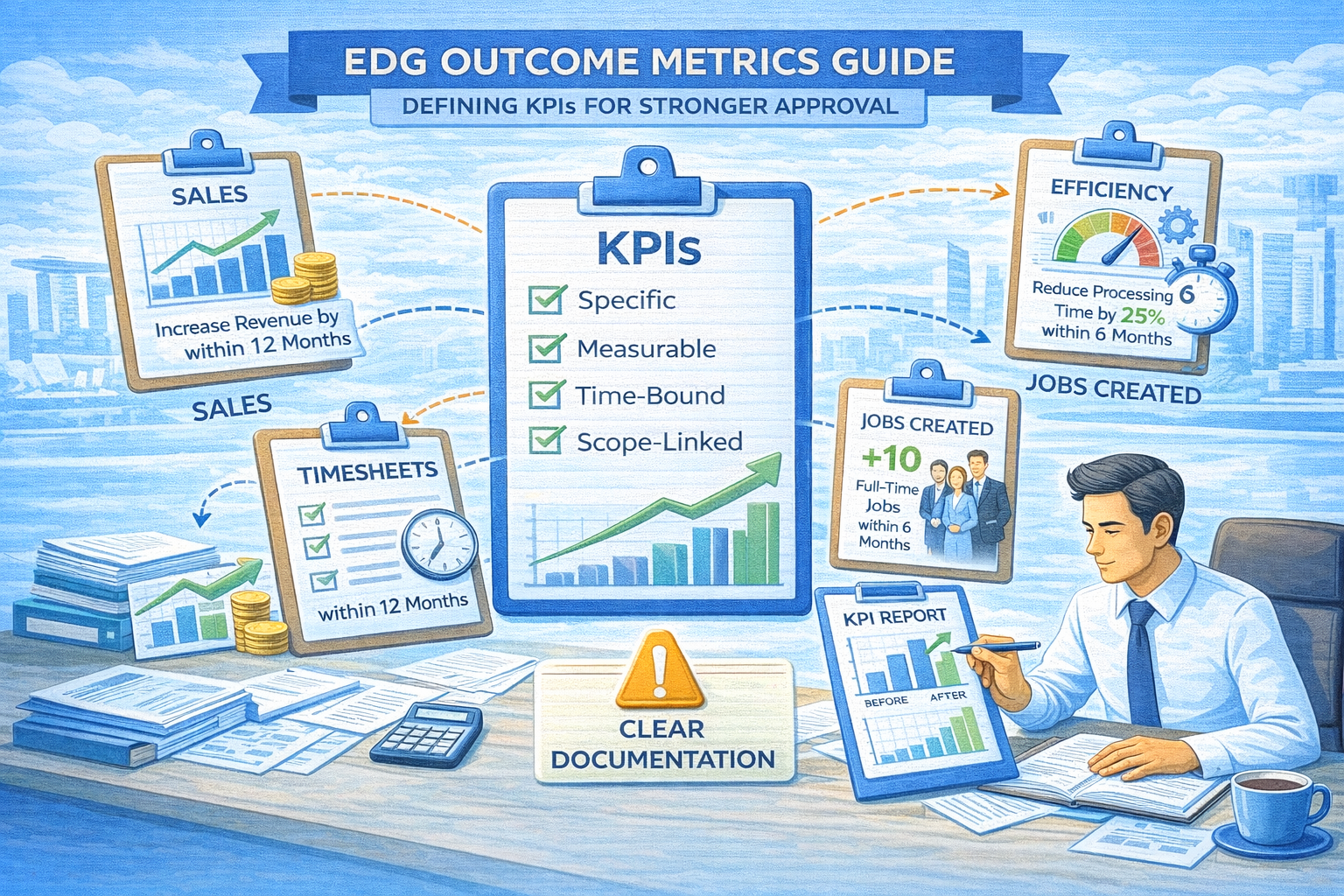
Strong KPIs are:
- Specific
- Measurable
- Time-bound
- Linked to approved scope
Example structure:
Instead of:
Improve operational efficiency
Use:
Reduce manual processing time by X% within Y months of implementation
Clarity reduces clarification cycles.
Linking scope to measurable outcomes
Each approved activity should logically lead to an outcome.
For example:
Activity:
Outcome:
- Reduction in turnaround time
- Error rate reduction
If linkage is weak, assessors may question project value.
Common KPI mistakes
- Using generic improvement statements
- Setting unrealistic percentage increases
- No baseline reference
- No timeline
- Metrics not connected to scope
KPIs must reflect both ambition and realism.
Realistic vs over-optimistic targets
Overly aggressive projections may:
- Trigger credibility concerns
- Increase claim-stage scrutiny
- Create compliance pressure
Balanced targets demonstrate responsible planning.
KPI documentation at claim stage
At claim stage, companies may need to show:
- Before vs after metrics
- Supporting data
- Evidence of implementation impact
Outcome tracking should begin during project execution.
References
Related Resources (Grant-Consulting.org)
https://www.grant-consulting.org/resources/edg-project-scope-design
https://www.grant-consulting.org/resources/edg-claims-checklist-reimbursement
https://www.grant-consulting.org/resources/edg-internal-manpower-claims-documentation
Official references
https://www.enterprisesg.gov.sg/financial-support/enterprise-development-grant
https://www.enterprisesg.gov.sg/resources/all-faqs/enterprise-development-grant
Call us now
Book a 20-minute consult (no obligation):
https://www.grant-consulting.org/contact
We help companies:
- define measurable KPIs
- align metrics to scope
- reduce clarification risk
- strengthen claim defensibility

 WhatsApp us
```
WhatsApp us
```