A clear, execution-stage guide for SMEs on EDG project amendments after the Letter of Offer (LOF), explaining when scope, timeline, or vendor changes are permissible, how amendment requests are assessed, and how to avoid claim rejection.
At a glance
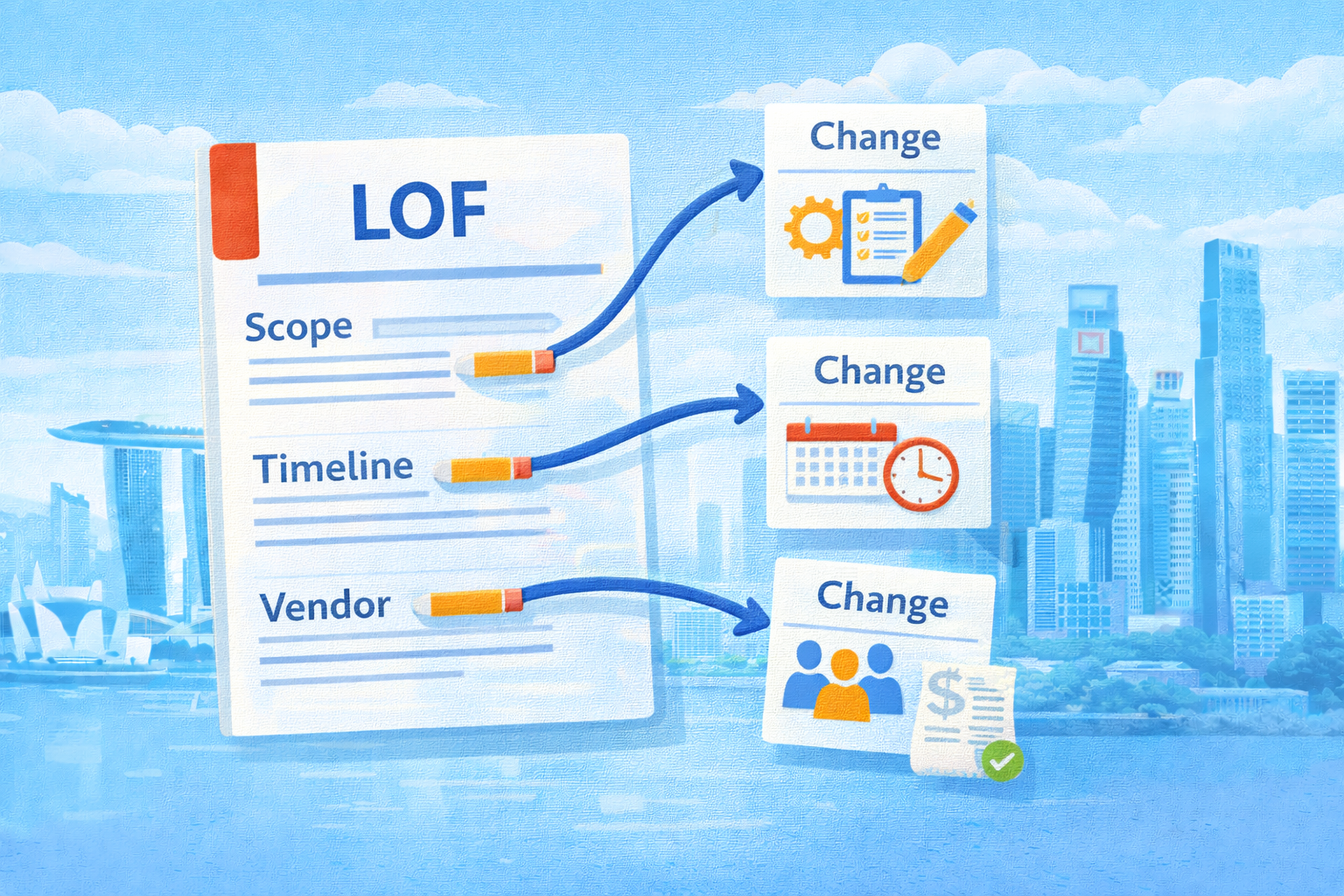
- EDG approval via the Letter of Offer (LOF) locks in scope, timeline, and vendors.
- Not all changes require amendments—but many do.
- Unapproved changes are a common reason for claim disallowance, not just delays.
- Amendments are assessed on materiality, intent, and risk, not convenience.
Table of contents
- What an EDG project amendment is
- Changes that usually require approval
- Changes that may not require approval
- How amendment requests are assessed
- Common amendment rejection reasons
- Practical scenarios and outcomes
- References
- Call us now
What an EDG project amendment is
An EDG project amendment is a formal request to vary the approved terms in the LOF after approval but before or during execution.
Amendments typically relate to:
- scope of work
- project timeline
- vendor or delivery structure
Any material deviation without approval introduces claim risk.
Changes that usually require approval
Scope changes
Approval is typically required if:
- activities are added, removed, or substituted
- deliverables materially change
- outcomes or KPIs are altered
Minor wording refinements may be acceptable, but substantive scope shifts are not.
Timeline changes
Approval is usually required when:
- the project end date needs extension
- milestones shift materially
- execution runs beyond the approved project window
Costs incurred outside the approved period are generally not claimable unless an amendment is approved.
Vendor changes
Vendor changes almost always require approval if:
- a named vendor is replaced
- delivery responsibility shifts materially
- vendor capabilities differ from the approved proposal
Unapproved vendor swaps are a frequent cause of claim rejection.
Changes that may not require approval
Some changes may be acceptable without formal amendment, depending on context:
- minor administrative updates
- non-material sequencing adjustments
- changes that do not affect scope, deliverables, cost structure, or outcomes
Rule of thumb: if the change would alter how an assessor understands the project, seek approval.
How amendment requests are assessed
Assessors typically evaluate amendments based on:
Intent
- does the change preserve the original project intent?
- or does it effectively create a new project?
Materiality
- is the change cosmetic or substantive?
- does it alter deliverables, outcomes, or risk?
Execution credibility
- does the amended plan still look executable?
- does it introduce new delivery or governance risks?
Amendments that strengthen delivery logic tend to be viewed more favourably than those driven by convenience.
Common amendment rejection reasons
- Late requests
- submitted after costs are incurred or project completed
- Material scope drift
- amendment effectively redefines the project
- Weak justification
- “operational reasons” without evidence
- Increased risk profile
- new vendors or approaches without validation
Practical scenarios and outcomes
Scenario A — Timeline extension
- execution delayed due to internal dependencies
- amendment requested before project end date
- justification provided with revised milestones
Result: amendment often approved
Scenario B — Vendor replacement
- original vendor unable to deliver
- replacement vendor has equivalent capability
- amendment submitted before engagement
Result: possible approval, subject to assessment
Scenario C — Unapproved scope change
- additional features implemented without approval
- costs included in claim
Result: costs likely disallowed
References
Related Resources (Grant-Consulting.org)
Official references
Call us now
Book a 20-minute consult (no obligation):
https://www.grant-consulting.org/contact
We can help you:
- assess whether a change requires amendment
- structure amendment requests that preserve claimability
- reduce execution and reimbursement risk

 WhatsApp us
```
WhatsApp us
```