
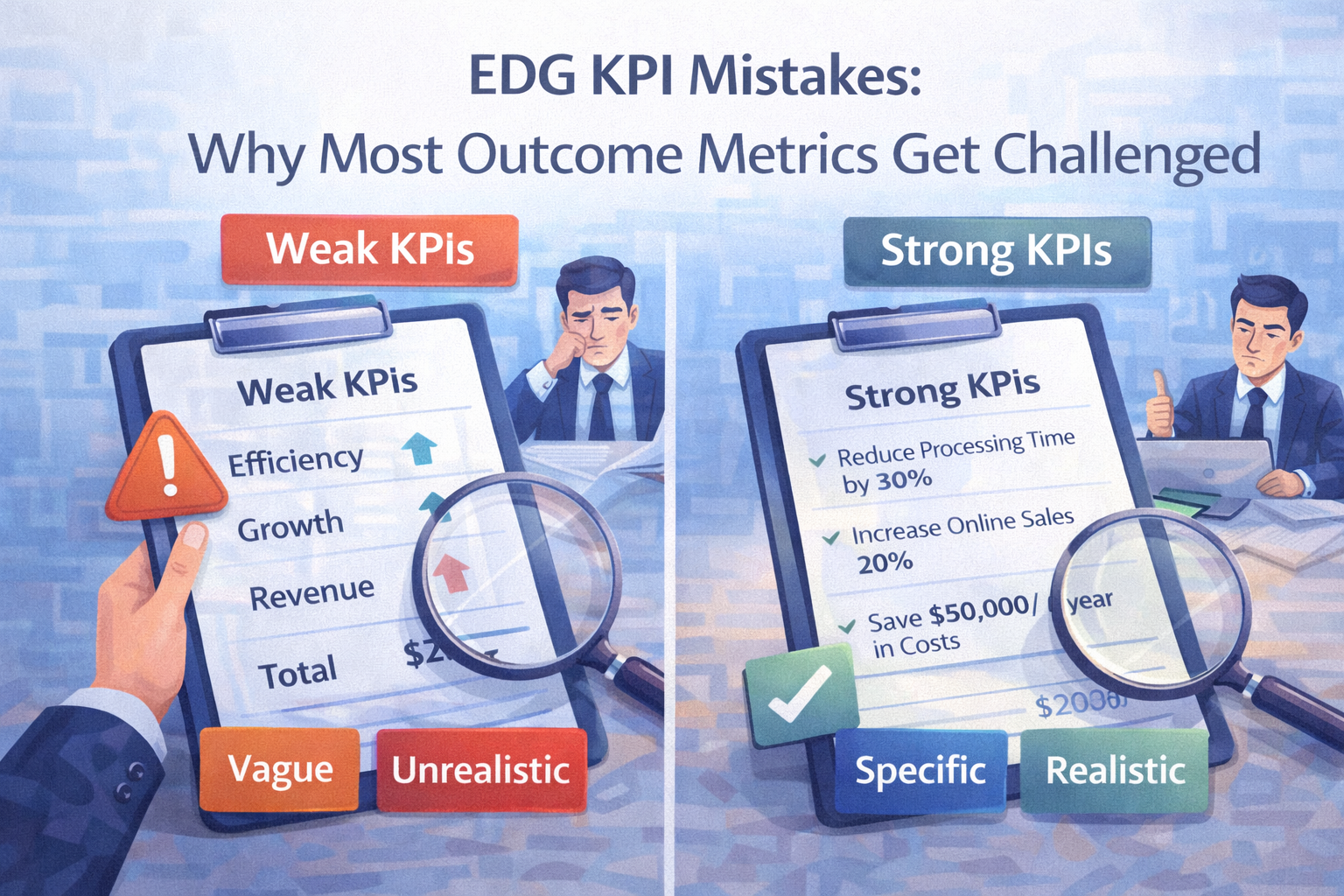
Most SMEs treat KPIs as a formality.
They shouldn’t.
In EDG applications, KPIs are one of the clearest signals of whether a project is:
And weak KPIs are one of the fastest ways to trigger assessor concerns.
From an assessor’s perspective, KPIs are not just targets.
They are proof of:
If your KPIs are vague or unrealistic, the entire project starts to look weak.
Common KPI mistakes include:
These reduce confidence in both planning and execution.
When evaluating KPIs, case officers assess:
1. Measurability
Can the KPI be tracked objectively?
2. Baseline vs target clarity
Is there a clear “before and after”?
3. Link to project scope
Do the KPIs reflect what the project actually delivers?
4. Realism
Are targets achievable given the company’s size and capability?
5. Business relevance
Do the KPIs matter to the business, or are they superficial?
To improve acceptance:
1. Start with baseline data
Clearly define current performance levels.
2. Use quantifiable metrics
Avoid vague statements—use numbers.
3. Align KPIs with scope
Each KPI should directly relate to project activities.
4. Keep targets realistic
Ambitious but achievable is key.
5. Focus on outcomes, not activities
Measure results, not effort.
Strong KPIs do more than support your application.
They signal to assessors that:
“This company understands what success looks like—and how to measure it.”
Weak KPIs signal the opposite.
And that difference directly affects approval outcomes.
If you are unsure whether your KPIs will stand up to scrutiny, it is worth reviewing them before submission.
We help companies define clear, measurable, and credible outcome metrics that align with project scope and assessor expectations.
https://www.grant-consulting.org/contact
 WhatsApp us
```
WhatsApp us
```